







Claims & Incident Management
Track Workplace Incidents and Claims from Report to Resolution
Centralize safety incident reporting, root cause investigations, and workers' compensation claims management. Turn reactive safety management into proactive risk reduction while streamlining claims administration—identifying incident patterns that inform prevention strategies and lowering claims costs.

Trusted by Industry Leaders
See how these organizations transformed their claims & incident management. Find out how →
How Pulpstream Handles Incidents and Claims
Organizations managing workplace safety and claims without centralized systems face compounding problems—unreported near-misses until serious injuries happen, delayed claims processing while injured employees wait, inconsistent investigations missing systemic issues, scattered documentation impossible to compile, and reactive safety management addressing injuries after they occur. Pulpstream turns reactive management into proactive prevention.
Catch Problems
Before They
Become Injuries
Report workplace accidents, near-misses, safety violations, and hazards through mobile-friendly forms. Automatic notifications route incidents to safety managers, triggering investigation workflows and corrective action tracking. Spot patterns before they become serious injuries or OSHA citations.
01
Systematic Analysis
That Prevents
Recurrence
Structured investigation templates walk safety teams through evidence collection, witness interviews, contributing factor analysis, and corrective action planning. Apply 5 Whys, —not just "employee error." Documentation automatically supports OSHA recordkeeping.
02
Workers' Comp
Administration
Without Chaos
Track workers' compensation, liability claims, and insurance claims from initial report through resolution. Manage medical documentation, treatment authorizations, adjuster communication, and settlement tracking—with complete audit trails connecting claims to underlying incidents.
03
Core Feature
Safety Management and Claims Administration
Pulpstream serves organizations with related but distinct needs. Safety-focused organizations need systematic incident reporting to prevent future injuries, track corrective actions, and demonstrate OSHA compliance. Claims-heavy organizations (healthcare, manufacturing, logistics) need efficient workers' compensation administration and claims cost tracking. Most organizations need both—because workplace incidents generate claims, and effective claims management requires understanding incident patterns.
What Systematic Reporting Looks Like:
-
Track incidents and near-misses: Mobile reporting from the field with photo/video documentation and automatic routing
-
Conduct structured investigations Guided workflows with root cause analysis frameworks built into the system
-
Identify safety patterns: Dashboard shows incident frequency by department, shift, equipment—spot systemic issues
-
Manage workers' comp claims: Intake, medical documentation, treatment authorization, settlement tracking in one system
-
Connect incidents to claims: See which incident types drive highest claims costs, prioritize safety investments with data
-
Track corrective actions: Assign responsibility, set deadlines, monitor completion—investigations aren't useful if nothing changes
.png?width=530&height=428&name=Inline-Image-2%20(9).png)
Core Feature
Turn Incident Patterns Into Preventable Risk Reduction
Workers' compensation claims cost an average of $42,000 per case. Organizations that systematically analyze incident patterns reduce claim frequency by 20-40%. Pulpstream connects incident reporting with claims management—showing which safety investments deliver the biggest claims cost reduction.
How the System Reduces Risk and Costs:
-
Claims cost tracking reveals which incident types drive highest expenses—justify safety investments with actual claims data, not guesswork.
-
Mobile incident reporting captures near-misses before they become injuries—employees report from the field with photos while details are fresh.
-
Comprehensive incident intake captures all critical information at the point of report—employee details, injury information, witness identification, body sketch diagrams showing injury location, photo upload capability, and immediate statement collection while details are fresh
-
Incident-to-claim linking connects workplace incidents with generated workers' comp claims automatically—see complete story from hazard to cost.
-
Root cause analysis frameworks (5 Whys,) examine contributing factors beyond "employee error"—understand full picture.
-
Pattern identification dashboards show incident clusters by department, shift, equipment, and type—identify systemic issues before someone gets seriously hurt.
Core Feature
Connected to Your HR and Safety Systems
Connect Pulpstream with HRIS, time tracking, and safety management systems. Employee data flows automatically. Incident reports trigger claims workflows when medical treatment is needed. Corrective actions integrate with maintenance and training systems.
-
Works with the tools you already use—from HRIS platforms to payroll systems to time tracking.
-
If it's not listed here, we can build the integration.
Connect Pulpstream with:
See the Complete Picture
Compliance Visibility and Cost Management
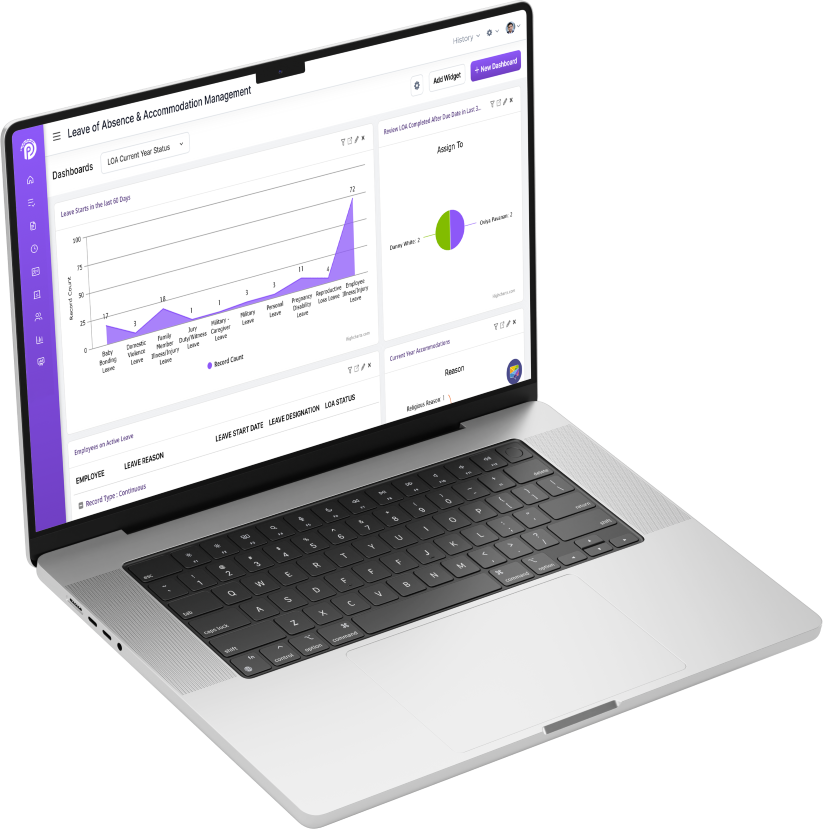
Which incident types drive your highest claims costs? Where do near-misses cluster that haven't yet generated injuries? Which departments have thorough investigations and which just file reports? Dashboard analytics show what manual processes hide—and where safety investments deliver ROI.
Dashboard visualization highlights:
-
Incident frequency analysis by location, shift, equipment
-
Claims cost tracking by department and incident type
-
Corrective action completion rates
-
OSHA recordkeeping and audit readiness

See What Our Customers Are Saying About Pulpstream
“Anyone looking to bring their leave management process in-house needs more than just software; they need a partner that can execute quickly, remain flexible post-launch, and prioritize their success over rigid implementation timelines.”

Claire Garver
Leave and Benefits Specialist, Arrive Logistics“I've recommended it quite a bit. It's flexible, it's intuitive, it's built with compliance in mind. And especially with organizations that have complexities like mine and high volume LOA populations, I think it's a must have.”
Stephanie Brazil
Benefits and Workforce Support Services Director, TAG – The Aspen Group“I absolutely love Pulpstream, so I cannot say enough. The system has been awesome. If any implementation team or customer support team could take on what Pulpstream does, oh my gosh, there would be no complaints across the board.”
Jennifer Fortier
ETNA SupplyDiscover How Pulpstream Reduces Risk and Costs

Capture Near-Misses Before They Escalate
Employees report from the field using smartphones—take photos of hazards, record location, describe what happened while details are fresh. Near-miss reporting catches problems before they become lost-time injuries.
Root Cause Analysis, Not Blame
Investigation templates guide safety teams through evidence collection, witness interviews, and contributing factor analysis. Apply systematic methods (5 Whys, Fishbone diagrams) rather than stopping at "employee error."
See Which Hazards Cost the Most
Workplace incidents generate claims. Link incident reports with workers' comp claims automatically. Understand which incident patterns drive your highest expenses—prioritize safety investments based on actual cost data.
Audit Documentation in Minutes
When OSHA shows up, your investigation records demonstrate you took incidents seriously. Form 300 recordkeeping supported automatically. Export complete incident and investigation documentation instantly.
Stop Reacting to Injuries—Start Preventing Them
Organizations managing workplace safety and workers' compensation separately miss the connection: incident patterns drive claims costs. Pulpstream shows which safety investments deliver the biggest claims cost reduction—reducing injuries by 20-40% while lowering workers' comp expenses.