
Skip to content
Header-background

The State of Leave Management 2026

Leave management benchmarked across compliance, automation, and experience

Report-Mockup (2)

Survey data from HR leaders on organizations managing 500 to 30,000+  employees, compiled with Bureau of Labor Statistics benchmarking, federal/state regulatory analysis across 50+ jurisdictions, and industry data on leave management adoption and outcomes.

This report addresses the critical questions HR leaders are currently asking: What are the common compliance gaps? How much is manual leave processing actually costing? And what does the realistic path to modernization look like?

Download The State of Leave Management 2026

Icon-Section-Background

What the Research Reveals

Icon-1 (24)

Compliance
Confidence
Varies

Only 20% of HR leaders feel "very confident" their processes would pass an audit. Yet 66% manage multi-state operations where mistakes trigger penalties. That gap between confidence and exposure is what creates audit risk.

Icon-2 (21)

Automation
Gap is
Measurable

49% of organizations cite automation as their 2026 priority—but less than 2% have reached advanced maturity. Early adopters are seeing 60–75% reductions in administrative time. The report shows you where to start and what ROI to expect.

Icon-3 (23)

Employee Experience
Opportunity

50% of employees are tolerating the leave process, not appreciating it. Organizations with modern leave experiences achieve a satisfaction rating of 4.2–4.8/5, compared to a baseline of 3.0. That gap directly impacts retention during vulnerable life moments.

No-Code-Business-Improvements-Icon

Multi-State
Complexity
Compounds

Multi-state operations are inherently 42% slower to process. Add Minnesota, Delaware, and Oregon's new paid leave programs launching in 2026, and manual tracking becomes impossible to scale. The report shows which capabilities handle multi-state concurrency automatically.

What You'll Learn

  • The Five Maturity Stages
    Where your organization likely ranks and what that means for risk and cost.
  • True Cost of Manual Processing
    The hidden expenses beyond just HR hours (errors, penalties, lost efficiency).
  • Multi-State Complexity Decoder
    How concurrent leave laws actually work and where most organizations fail.
  • Employee Experience as Risk Mitigation
    Why modern leave experiences directly reduce compliance gaps and improve retention.
  • 2026 Regulatory Roadmap
    What's changing and when—and how to stay compliant without constant manual updates.
  • Automation Opportunity
    Specific ROI benchmarks for different organization sizes and current-state approaches.

U.S. State Leave Law Complexity Map

Number of state-level leave programs by jurisdiction (2026)
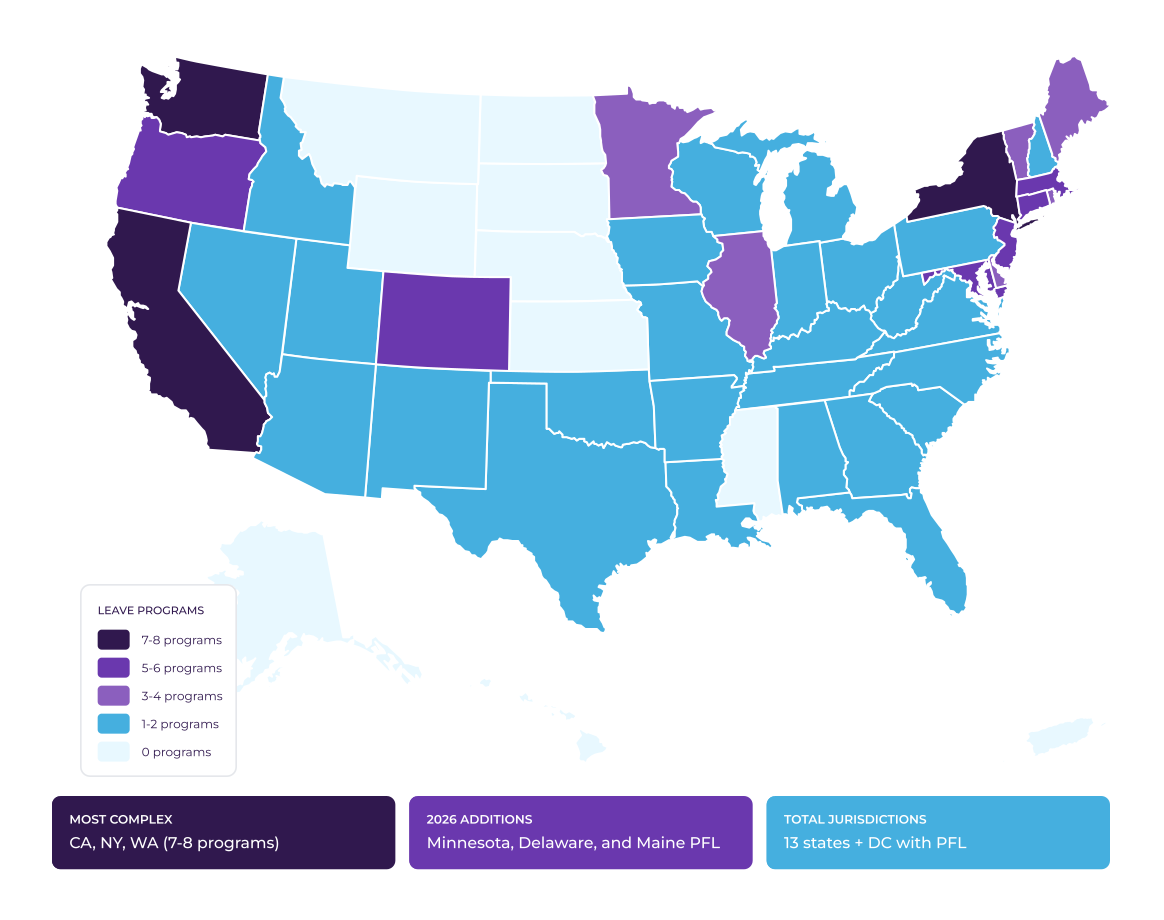
Final-2026-Map-SVG

Why HR Leaders Download This Report Right Now

Leave management complexity isn't slowing down. New state regulations, growing employee expectations, and the costs of manual processes are forcing organizations to modernize faster than ever. This report cuts through the noise and gives you the specific data you need to make the case for change—or confirm you're on the right track.

  • Audit Readiness Check
    Your compliance confidence might be overstated. See exactly where you stand and what the three most common failures are.
  • Calculate Your ROI
    Organizations spend $100K–$115K annually on manual processes. See how automation cuts that cost—and get it business-case ready.
  • Stay Ahead of 2026 Regulations
    Minnesota, Delaware, and Oregon are launching new paid leave programs. Know what's coming before it hits.
  • Benchmark Against 500+ Peers
    See how organizations like yours are handling leave management and what the maturity gaps cost.
  • Build Your Modernization Roadmap
    The Five Maturity Stages framework shows you not just where to go, but how to get there step by step.
  • Connect Employee Experience to Business Outcomes
    Half your employees are tolerating leave requests. Understand the retention impact and how to change it.